Visitors to Tanzania often describe mobile money as a clever workaround — a way for people without bank accounts to make do until "real" banking arrives. This gets it exactly backwards. Mobile money is not a substitute for the system the West has. In several important ways, it is ahead of it. The West is now building, with great effort and fanfare, instant phone-to-phone payments that East Africa has used daily for over a decade.
If you build software or run a business here, understanding this is not academic. Mobile money is the actual operating system your customers' financial lives run on. Build with it and you fit how money already moves. Build against it — assuming cards, assuming banks — and you build something your customers cannot comfortably use.
What it actually is, for the unfamiliar
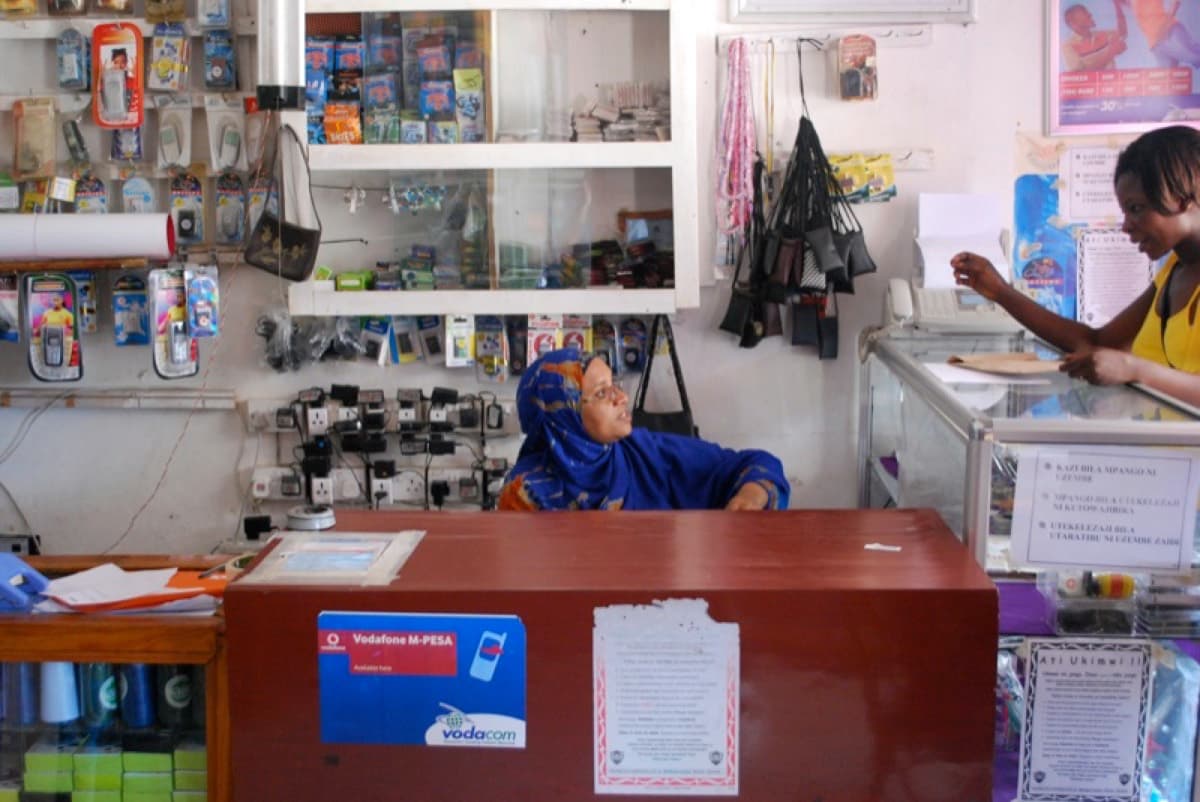
Mobile money lets anyone with a basic phone store value and send it to anyone else with a phone, using their phone number as the account. M-Pesa, Tigo Pesa, Airtel Money — the names vary, the model is shared. You put cash in through a local agent, you send it with a few taps or a USSD code, and the person on the other end has it instantly. No bank account required. No card. No app, even — it works on the simplest handset.
That last point is the one outsiders miss. This is not a banking app for smartphones. It is financial infrastructure that runs on the phone almost everyone already has, including in places with no bank branch for a hundred kilometres.
Mobile money is not the system we use because we lack banks. It is, in several ways, the better system — instant, universal, running on the phone everyone already has.
Why it is genuinely better, not just adequate
Three properties make it superior to the card-and-bank model for the conditions it serves.
It is instant and final. A mobile-money transfer settles in seconds, person to person, with immediate confirmation to both sides. Card payments, by contrast, drag a slow machinery of authorisation, settlement, and reversal behind them. The thing the West now markets as cutting-edge "instant payments" is the baseline we have lived in for years.
It is nearly universal. Card penetration in much of East Africa is low; mobile-money penetration is enormous. If you accept cards only, you have shut out most of the market. If you accept mobile money, you can be paid by almost anyone — the farmer, the boda rider, the grandmother in the village, none of whom has or wants a card.
It works at the bottom of the market. Mobile money handles tiny transactions cheaply and serves people with no formal financial history. The card system was built for a salaried, banked, urban customer. Mobile money was built for everyone, and "everyone" is who you are actually selling to.
What this means if you build software
The mistake I see most often is software designed for card rails and then awkwardly retrofitted for mobile money. It produces a worse product than designing for mobile money from the first sketch. A few things genuinely differ, and you have to design for them, not paper over them.
Confirmation is asynchronous and human-shaped. A card charge happens silently in the background. A mobile-money payment is an action the customer takes on their own phone — they push the money, then your system learns it arrived. Your software must be built around "waiting for the customer to confirm payment from their side," not "charging a card we hold." This changes the whole flow, and pretending it does not is the root of most bad integrations.
"Recurring billing" is mostly a fiction. The card world silently charges a saved card every month. Mobile money has no comfortable equivalent, and customers are rightly wary of anything that moves their money without an explicit push. Subscriptions here usually mean the customer choosing to pay again — so design for a smooth, well-reminded re-payment, not a silent automatic charge. Fighting this to force a Western subscription model just frustrates the customer.
Reconciliation is its own real task. You will match payments against mobile-money statements, sometimes by reference codes customers forget to include. Build for the messy reality — a way to match a payment to an order when the customer paid correctly but labelled it wrongly — because they will, constantly.
The strategic point for founders
There is a temptation, especially when you read foreign startup advice, to treat mobile money as the embarrassing local constraint you will graduate from once you "go global" and add proper card payments. Resist it. For a business serving East African customers, mobile money is not the constraint. It is the advantage.
It lets you be paid by the entire market, instantly, with no bank in the loop. It is what lets a school accept fees from parents who have never held a card, and a safari operator take a deposit from a customer hundreds of kilometres from any branch. Foreign competitors who only understand cards literally cannot serve these customers. Your fluency in how money actually moves here is a moat, not a limitation.
The honest summary
Mobile money is the financial operating system of East African business — instant, near-universal, and built for everyone rather than the banked few. It is not a stopgap for missing infrastructure; it is infrastructure, and in important ways a better design than the card system it is unfavourably compared to.
Build for it deliberately. Design your payment flows around how mobile money actually behaves rather than retrofitting card assumptions, and treat your understanding of it as the competitive advantage it is. The rest of the world is busy reinventing what you already have. Use it well, and let them catch up.